
Many people want clearer vision without relying on glasses or contact lenses. When researching laser eye surgery, two names often come up. These are LASIK and PRESBYOND.
Both treatments use laser technology to help improve vision. However, they are designed for different vision needs. Understanding the difference between PRESBYOND and LASIK can help patients learn which option may be more suitable for their eyes and lifestyle.
At Eagle Eye Surgeons, patients receive a detailed eye assessment before treatment. This helps determine which vision correction option may be recommended based on eye health, prescription, and age.
Understanding LASIK
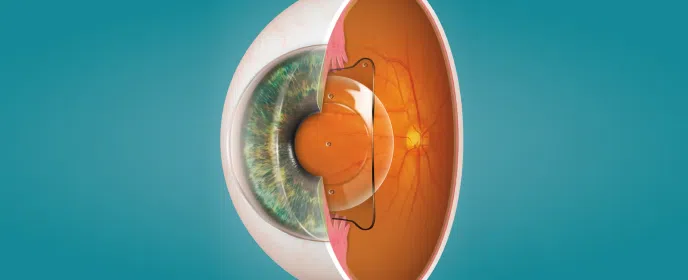
LASIK is a type of laser eye surgery that is commonly used to treat short sightedness, long sightedness, and astigmatism.
During LASIK, a laser reshapes the cornea to help light focus more clearly on the retina. The aim is to improve distance vision and reduce dependence on glasses or contact lenses.1https://www.mayoclinic.org/tests-procedures/lasik-eye-surgery/about/pac-20384774
LASIK is often chosen by adults whose prescriptions have remained stable over time.
What vision problems can LASIK treat?
LASIK is mainly designed to improve distance vision problems.2https://www.mayoclinic.org/tests-procedures/lasik-eye-surgery/about/pac-20384774 This includes difficulty seeing objects far away or issues caused by astigmatism.
Some people who have LASIK may still need reading glasses later in life. This is because LASIK does not stop the natural ageing changes that affect near vision over time.3https://www.mayoclinic.org/tests-procedures/lasik-eye-surgery/about/pac-20384774
As people move into their 40s and beyond, they may begin to notice age-related near vision changes called presbyopia.
Understanding PRESBYOND
PRESBYOND is a type of laser eye surgery designed to help manage presbyopia. Presbyopia is the normal age-related loss of near focusing ability.
People with presbyopia may struggle to read menus, books, or phone screens without reading glasses.4https://pmc.ncbi.nlm.nih.gov/articles/PMC9522566/
PRESBYOND uses a treatment approach called laser blended vision. The treatment is designed to help patients see across different distances by allowing the eyes to work together in a balanced way.5https://pmc.ncbi.nlm.nih.gov/articles/PMC9522566/
How PRESBYOND works
With PRESBYOND, one eye is adjusted more for distance vision while the other eye supports near vision. The brain learns to combine the images from both eyes to create a smooth range of vision.
The treatment is personalised based on the patient’s prescription, eye measurements, and visual needs.
Some people may notice improved vision for daily tasks such as reading, computer use, and distance viewing after recovery.6https://pmc.ncbi.nlm.nih.gov/articles/PMC9522566/ Results can vary between individuals.
The main difference between PRESBYOND and LASIK
The biggest difference between PRESBYOND and standard LASIK is the type of vision problem they are designed to treat.
LASIK mainly focuses on correcting distance vision problems. PRESBYOND is specifically designed to help people with presbyopia and age-related near vision changes.
This means age often plays a role in deciding which treatment may be more suitable.
Age and vision changes
Many younger adults choose LASIK because they want clearer distance vision without glasses or contact lenses.7https://www.mayoclinic.org/tests-procedures/lasik-eye-surgery/about/pac-20384774
People over the age of 40 may begin noticing problems with near vision, even if their distance vision is still good. This is where PRESBYOND may become an option for some patients.8https://pmc.ncbi.nlm.nih.gov/articles/PMC9522566/
A detailed consultation can help determine which treatment may better suit the patient’s eyes and daily activities.
Who may be suitable for LASIK?
LASIK may be suitable for adults with stable vision and healthy eyes who want to reduce their dependence on glasses or contact lenses.9 https://www.mayoclinic.org/tests-procedures/lasik-eye-surgery/about/pac-20384774
Suitability depends on several factors, including corneal thickness, eye health, prescription strength, and overall vision stability.
Not everyone is suitable for LASIK. Some patients may be advised to consider other treatment options instead.
Why assessment is important
A full eye assessment helps the surgeon understand the patient’s vision needs and eye health.
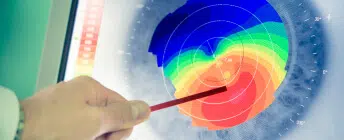
Advanced scans and measurements are used to guide treatment planning and assess suitability. These tests can also help identify eye conditions that may affect treatment choices.
Patient safety is an important part of the assessment process.
Who may be suitable for PRESBYOND?
PRESBYOND may be suitable for some adults who are experiencing presbyopia and would like to reduce their reliance on reading glasses.10 https://pmc.ncbi.nlm.nih.gov/articles/PMC9522566/
Suitability depends on eye health, prescription stability, and how the eyes work together.
Some patients may adapt well to blended vision, while others may not. A consultation can help determine whether this approach may suit the patient’s visual needs and lifestyle.
Lifestyle and vision goals
Different people have different vision goals. Some patients spend long hours reading or working on screens. Others may focus more on driving, travel, or outdoor activities.
A personalised assessment can help match treatment options to the patient’s lifestyle and daily routines.
Your surgeon can explain what outcomes may be realistic based on your individual vision needs.
What happens during recovery?
Recovery after LASIK or PRESBYOND can vary from person to person.
Some people notice vision improvements quickly, while others may need more time for vision to stabilise. Patients are usually given eye drops and instructions to support healing.
Follow-up visits are an important part of recovery after both treatments.
Possible side effects and risks
Like all medical procedures, laser eye surgery carries possible risks and side effects.
Some patients may experience dry eyes, glare, halos, or temporary blurry vision during recovery.11https://www.lasereyesurgeryhub.co.uk/laser-eye-surgery/safety-2/ Outcomes can vary between individuals.
No procedure can guarantee perfect vision or complete freedom from glasses. A consultation with an experienced eye surgeon can help patients understand the possible benefits and risks before treatment.
Choosing the right treatment
Choosing between PRESBYOND and LASIK depends on many factors, including age, eye health, prescription, and vision goals.
Some patients may benefit more from standard LASIK, while others may be better suited to PRESBYOND because of age-related near vision changes.
The best treatment option is different for every patient. Treatment choice can also affect price. Our guide explains how much laser eye surgery costs and what may be included.
Personalised care matters
Laser eye surgery should never be a one-size-fits-all approach. Careful testing and personalised treatment planning are important parts of achieving the best possible outcome for each patient.
Patients should feel comfortable asking questions about treatment options, recovery, and possible risks during their consultation.
Clear communication can help patients make informed decisions about their eye care.
Taking the next step
If you are thinking about laser eye surgery in Sydney Australia, learning about your options is an important first step.
A detailed consultation can help determine whether LASIK, PRESBYOND, or another treatment option may be suitable for your eyes and lifestyle.
The best way to begin your journey is to take a suitability self test with Eagle Eye Surgeons and learn more about your vision correction options.

– Fellow of the Royal Australian and New Zealand College of Ophthalmologists (FRANZCO)
– Fellow of World College of Refractive Surgery and Visual Sciences (FWCRS)
– GradDipGraduate Diploma in Cataract and Refractive Surgery (University of Sydney)
– Master of Medicine (MMed, Ophthalmic Sciences, University of Sydney)
– Bachelor of Medicine and Surgery (MBBS, University of Tasmania)
Dr. Erica was a recipient of the 2022 ASCRS Foundation Resident Excellence Award. In 2019, she was awarded the RANZCO Filipic Greer Medal for overall excellence in performance at the RANZCO Ophthalmic Pathology examination. Most recently, she was awarded the Royal Australian and New Zealand College of Ophthalmologists (RANZCO) Trevalyn-Smith Travelling Scholarship to subsidize overseas study for Fellows.
As an accomplished researcher Dr. Erica’s work has been published widely in high quality medical journals, including the American Journal of Ophthalmology, the Journal of Cataract and Refractive Surgery, the European Journal of Ophthalmology and Clinical and Experimental Ophthalmology. Erica has also written a book chapter and has had the opportunity to present her research at various international and national conferences. Dr. Erica is appointed as a Clinical Lecturer in the Discipline of Ophthalmology at the University of Sydney, Save Sight Institute and regularly contributes to ongoing teaching in her area of subspeciality.