

What is the difference between SMILE Pro and LASIK
Not sure whether SMILE Pro or LASIK is right for you? Learn how these two laser eye surgery procedures differ and why a personalised assessment matters.…
Implantable collamer lens (ICL) surgery places a thin corrective lens inside the eye while keeping your natural lens in place. At Eagle Eye Surgeons, our experienced ophthalmologists offer ICL treatment for suitable patients, including people who may not be candidates for laser vision correction.

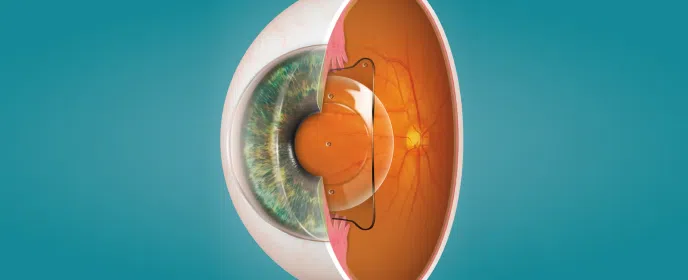
ICL surgery, also known as phakic intraocular lens insertion, addresses refractive error by placing a corrective lens inside the eye while leaving the natural lens intact. Unlike laser refractive surgery, it does not reshape the cornea. It is also different from cataract surgery, where the natural lens is removed and replaced.
The procedure can correct a wide range of refractive errors, including higher prescriptions. People searching for an ICL operation for eyes are generally referring to this type of phakic lens procedure.

At Eagle Eye Surgeons, we use the EVO ICL™ from STAAR® Surgical, a soft, foldable Collamer lens positioned behind the iris and in front of the natural lens. Its central port allows fluid to circulate through the eye without requiring a pre-operative peripheral iridotomy. The EVO ICL received FDA approval in 2022 following clinical evaluation of its safety and effectiveness.

An ICL eye operation follows a structured process, from detailed measurements through to ongoing follow-up.

ICL may be considered for adults who are:

After ICL eye surgery, many patients notice a significant improvement in vision quickly. At Eagle Eye Surgeons, nearly all patients achieve 20/20 vision by the first day after surgery, although vision can continue to settle over the following weeks. Follow-up appointments are used to monitor healing, eye pressure and lens position. All appointments during the first six months after surgery are included in the surgery fee, with no additional follow-up charges during this period.
From your first conversation through to follow-up care, we make each stage of ICL surgery clear and easy to understand.
The first step is to find out whether vision correction may be suitable for your eyes and your goals. Book a free appointment or speak with our team to start your journey.
At your appointment, we will assess your eyes, explain the options available to you and answer your questions. You will leave with a clear understanding of what the next steps look like.
For many patients, ICL surgery means relying less on glasses or contact lenses in everyday life. Our team will also guide you through your recovery and follow-up care after treatment.

Eagle Eye Surgeons combines specialist ophthalmic care with careful assessment and clear guidance throughout treatment. At our ophthalmology clinics in Sydney, we use modern diagnostic and surgical technology to plan treatment around your eye health and visual needs, with structured care before and after surgery.


Advantages
Disadvantages
While phakic ICL surgery is generally safe and well-tolerated, like any surgical procedure, it carries some risks and potential complications. It is important to be aware of these risks before undergoing the surgery.
Some potential risks and complications include:
Alternatives depend on your eyes and visual goals. Some people continue using glasses or contact lenses, while others may be suitable for laser vision correction such as LASIK or PRK. Depending on age and prescription, a lens-based treatment such as refractive lens exchange may also be discussed. A full assessment allows your surgeon to compare the options based on your eye health and individual needs.
Implantable Collamer Lens (ICL) surgery and LASIK are both vision correction procedures designed to reduce dependence on glasses or contact lenses, but they work in different ways. LASIK reshapes the cornea using a laser to correct refractive errors such as short-sightedness, long-sightedness and astigmatism. ICL surgery involves placing a biocompatible lens inside the eye without removing the eye’s natural lens.
ICL may be considered for people with higher prescriptions, thinner corneas or those who may not be suitable candidates for laser vision correction. LASIK may suit individuals with stable vision and adequate corneal thickness. Both procedures have potential benefits and risks, and not everyone is suitable for either treatment.
| ICL surgery | LASIK | |
|---|---|---|
| Procedure | Corrective lens implanted inside the eye while the natural lens remains | Corneal flap created, then an excimer laser reshapes the cornea |
| Prescription range | Can suit higher prescriptions that may fall outside the laser treatment range | Depends on prescription and the amount of corneal tissue available |
| Corneal requirement | Does not reshape or remove corneal tissue | Requires adequate corneal thickness and suitable topography |
| Reversibility | Lens can be removed or replaced when clinically appropriate | Corneal reshaping is not reversible |
| Dry eye impact | Does not involve cutting corneal nerves in the same way as LASIK | Dry eye symptoms can occur while corneal nerves recover |
| Recovery | Vision may improve within days and continue stabilising over several weeks | Vision commonly improves within the first day or two |
The implanted lens is designed to remain inside the eye long-term. You may see ICL described as ‘permanent contact lenses’ or an ‘implantable contact lens’, but these are lay terms. Unlike a contact lens, the ICL is positioned inside the eye and can be removed or replaced by an ophthalmologist if clinically appropriate. The natural lens remains in place.
Yes, certain types of ICLs are designed to correct astigmatism as well as short-sightedness. Whether this option is suitable depends on your prescription and the results of your eye examination.
No, the implanted lens does not require routine maintenance. However, regular eye examinations remain important to monitor your overall eye health and ensure the lens continues to function as intended.
Read expert-led articles on ICL and other eye treatments, with practical information to help you understand your options and what to expect.
Not sure whether SMILE Pro or LASIK is right for you? Learn how these two laser eye surgery procedures differ and why a personalised assessment matters.…
Thinking about laser eye surgery? Learn how to book a consultation, what happens during your appointment, and how to prepare. Read our latest blog and take…
Thinking about PRESBYOND? Learn what results you may expect, how recovery can affect your vision, and why personalised treatment matters. Read our latest blog and take…

I’m a FRANZCO ophthalmic surgeon focused on refractive surgery. I trained in Sydney at Prince of Wales Hospital, then completed a two-year corneal and refractive fellowship in Toronto, Canada. I also hold a Graduate Diploma in Cataract and Refractive Surgery and a Master of Medicine in Ophthalmic Sciences from the University of Sydney, and I lecture there as a Clinical Lecturer. I am a Fellow of the World College of Refractive Surgery and Vision Sciences and have a subspecialty interest in treating presbyopia.
I take time to listen, explain options clearly, and guide you through each step so you can make informed choices with confidence and calm. I am passionate about getting you your best visual outcomes.
Owner
FRANZCO, FWCRS, MMed, MBBS

I’m a FRANZCO trained ophthalmic surgeon. My work covers refractive surgery, cataract surgery, complex anterior segment and lens surgery, and conditions of the retina and vitreous. I completed medical training at the University of Sydney and Royal Prince Alfred Hospital, then completed ophthalmology training in the Prince of Wales Hospital network. I am trained in refractive surgery and have completed the Forefront Refractive Surgery Course run by the highly respected London Vision Clinic. I have further fellowship level training in complex anterior segment surgery and vitreoretinal surgery.
In addition to my work with Eagle Eye Surgeons, I am the Head of Department for Ophthalmology at Nepean Hospital and have led the expansion of publicly funded eye surgery in the Nepean Blue Mountains Local Health District.
I focus on clear explanations, careful planning, and follow-up that keeps you supported at every stage, always.
Owner
FRANZCO, MMed(Critical Care), MBBS(Hons), BSc

I am a RANZCO trained ophthalmologist with experience caring for patients across New South Wales, Queensland, and the United Kingdom. These diverse roles have given me extensive experience managing a wide range of eye conditions while reinforcing my commitment to providing personalised, high-quality care to every patient. I believe in taking the time to answer your questions, explain every treatment option, and help you make informed decisions about your eye health.
Alongside my clinical work, I am passionate about medical education and have taught medical students, junior doctors, and ophthalmology trainees in both Australia and the UK.
My practice is guided by the latest evidence-based techniques and technologies to achieve the best possible outcomes, whether you are considering cataract surgery, treatment for a corneal condition, or refractive surgery to reduce your dependence on glasses.
RANZCO, MMed(OphthSc), MBBS