

What is the difference between SMILE Pro and LASIK
Not sure whether SMILE Pro or LASIK is right for you? Learn how these two laser eye surgery procedures differ and why a personalised assessment matters.…
PRK Eye Surgery
Discover how this flap-free laser treatment reshapes the surface of the cornea to help correct vision for suitable patients

Learn how this established laser eye procedure works, including the benefits, risks, and whether it may be right for you
PRK may suit adults with a stable glasses prescription who want to reduce their need for glasses or contact lenses. It can treat short sight, long sight, and astigmatism, which means the eye has an uneven curve.
PRK may be a suitable option for individuals who are not candidates for LASIK due to thinner corneas or other corneal irregularities, or sometimes for patients who have had previous laser eye surgery.
PRK is often considered for people whose work, sport, or lifestyle makes a flap-free procedure more suitable. Your eyes also need to be healthy.
(Photorefractive Keratectomy) is an older technique that predates LASIK but is still widely used today, especially when LASIK is not an option.
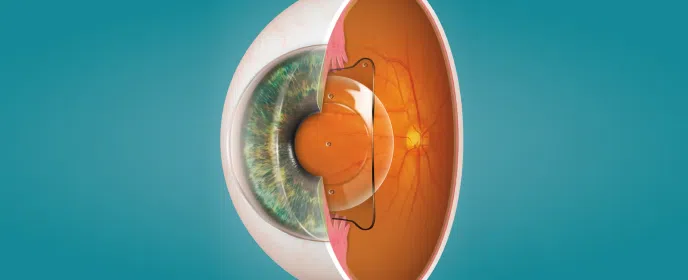
With PRK, the thin outer layer of the cornea, known as the epithelium, is removed to allow direct reshaping of the underlying cornea with the excimer laser.
The epithelium then regenerates naturally over time.
Advantages
Disadvantages
Like any eye procedure, PRK has risks and possible side effects. These can include discomfort in the first few days, blurred vision, dry eye, glare, halos, light sensitivity, and slower visual recovery than other laser treatments.
Some people may also have under-correction or over-correction, which means the final result may not be exactly as planned.
Infection and inflammation are uncommon, but they can occur and need prompt treatment.
Corneal haze can also develop during healing in some cases.
No procedure can guarantee perfect vision or complete freedom from glasses. A full consultation helps explain the risks and likely outcomes for your eyes.
If PRK is not the best fit, there are other vision correction options. These may include LASIK, SMILE Pro, implantable contact lenses, lens replacement, or continuing with glasses or contact lenses.
The right option depends on your prescription, corneal thickness, eye health, age, and visual needs. Some people are better suited to one treatment than another.
A full assessment can help identify the safest and most appropriate choice for your eyes and lifestyle.
PRK is designed to help reduce your reliance on glasses and contact lenses by improving how light focuses in the eye. For many people, that can mean daily life feels easier, with fewer moments of reaching for eyewear. Many patients notice meaningful changes over the first few weeks, with vision continuing to settle over time.
Laser eye surgery can feel like a big decision. We make the process clear, supportive, and easy to follow
Laser eye surgery isn’t for everyone. The first step is to get a clear answer on whether laser vision correction can help you or not. Book a free appointment online or call us
At your appointment, we will discuss your lifestyle and answer your questions. If you are suitable, we will explain your options so you can make an informed choice.
After treatment, many patients notice everyday tasks can feel easier with less reliance on glasses or contact lenses. Things like driving, exercise, travel, work, and getting ready in the morning may feel simpler.
Explore simple, expert-led blogs that explain your options, what to expect, and the everyday benefits people look for, so you can feel clear and confident about your next step
Not sure whether SMILE Pro or LASIK is right for you? Learn how these two laser eye surgery procedures differ and why a personalised assessment matters.…
Thinking about laser eye surgery? Learn how to book a consultation, what happens during your appointment, and how to prepare. Read our latest blog and take…
Thinking about PRESBYOND? Learn what results you may expect, how recovery can affect your vision, and why personalised treatment matters. Read our latest blog and take…

I’m a FRANZCO ophthalmic surgeon focused on refractive surgery. I trained in Sydney at Prince of Wales Hospital, then completed a two-year corneal and refractive fellowship in Toronto, Canada. I also hold a Graduate Diploma in Cataract and Refractive Surgery and a Master of Medicine in Ophthalmic Sciences from the University of Sydney, and I lecture there as a Clinical Lecturer. I am a Fellow of the World College of Refractive Surgery and Vision Sciences and have a subspecialty interest in treating presbyopia.
I take time to listen, explain options clearly, and guide you through each step so you can make informed choices with confidence and calm. I am passionate about getting you your best visual outcomes.
Owner
FRANZCO, FWCRS, MMed, MBBS

I’m a FRANZCO trained ophthalmic surgeon. My work covers refractive surgery, cataract surgery, complex anterior segment and lens surgery, and conditions of the retina and vitreous. I completed medical training at the University of Sydney and Royal Prince Alfred Hospital, then completed ophthalmology training in the Prince of Wales Hospital network. I am trained in refractive surgery and have completed the Forefront Refractive Surgery Course run by the highly respected London Vision Clinic. I have further fellowship level training in complex anterior segment surgery and vitreoretinal surgery.
In addition to my work with Eagle Eye Surgeons, I am the Head of Department for Ophthalmology at Nepean Hospital and have led the expansion of publicly funded eye surgery in the Nepean Blue Mountains Local Health District.
I focus on clear explanations, careful planning, and follow-up that keeps you supported at every stage, always.
Owner
FRANZCO, MMed(Critical Care), MBBS(Hons), BSc

I am a RANZCO trained ophthalmologist with experience caring for patients across New South Wales, Queensland, and the United Kingdom. These diverse roles have given me extensive experience managing a wide range of eye conditions while reinforcing my commitment to providing personalised, high-quality care to every patient. I believe in taking the time to answer your questions, explain every treatment option, and help you make informed decisions about your eye health.
Alongside my clinical work, I am passionate about medical education and have taught medical students, junior doctors, and ophthalmology trainees in both Australia and the UK.
My practice is guided by the latest evidence-based techniques and technologies to achieve the best possible outcomes, whether you are considering cataract surgery, treatment for a corneal condition, or refractive surgery to reduce your dependence on glasses.
RANZCO, MMed(OphthSc), MBBS